
The future of our cities will be shaped by the choices we make today — and building with mass timber is one of the most powerful strategies we have to confront the climate crisis.
Among the 17 global goals of the United Nations, SDG 13 – Climate Action calls for urgent and collective action. The construction sector, responsible for a considerable portion of global greenhouse gas emissions, must play a central role in this transformation. And a viable, scalable, and truly sustainable path already exists: mass timber construction, sourced from responsibly managed planted forests.
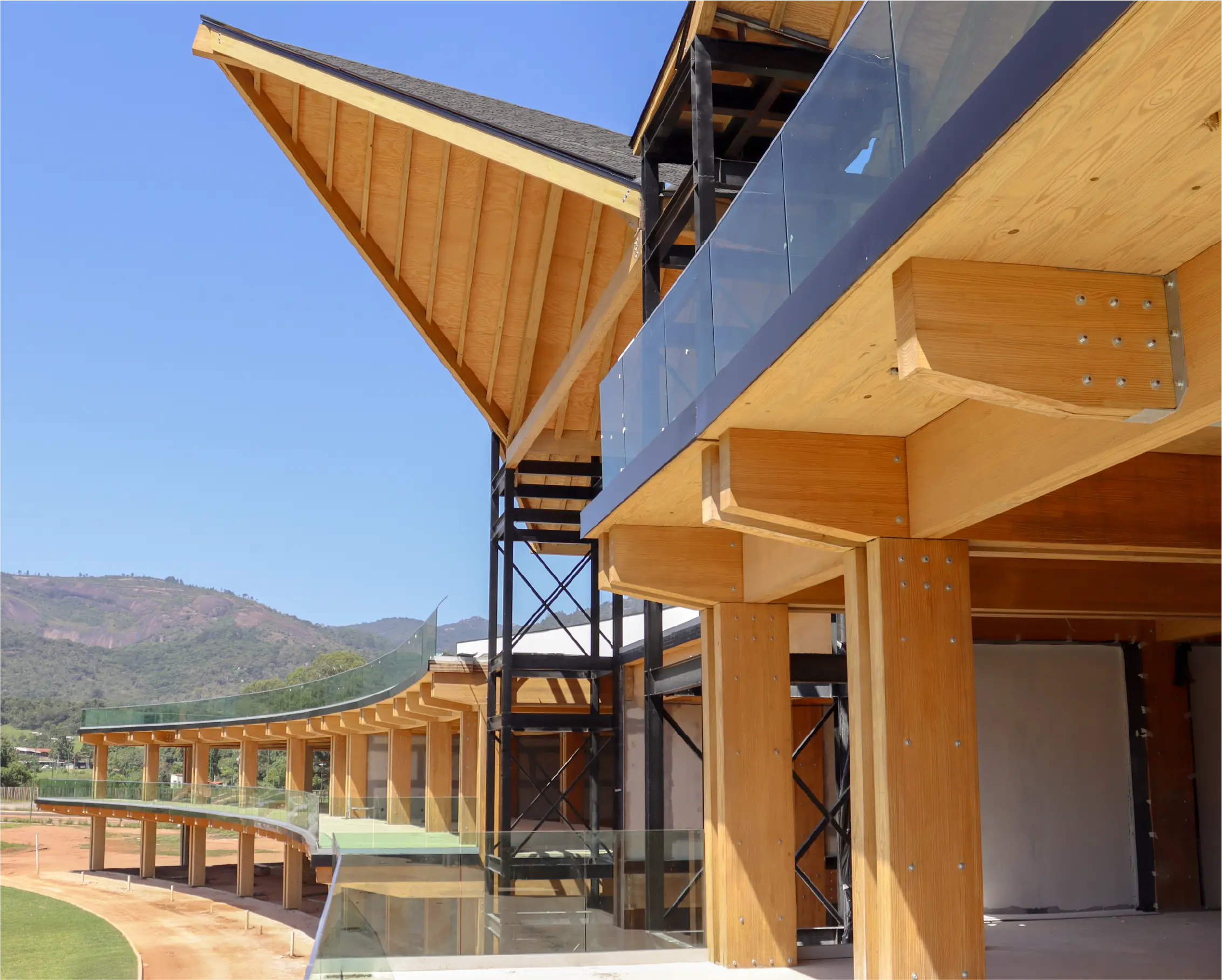
Unlike other construction systems, mass timber has the unique ability to store the carbon captured from the atmosphere throughout its lifecycle. Each cubic meter of wood retains the CO₂ absorbed during tree growth, acting as a natural carbon reservoir. When incorporated into projects — including hybrid structures — it directly contributes to reducing the overall carbon footprint and rebalancing the planet’s carbon cycle.
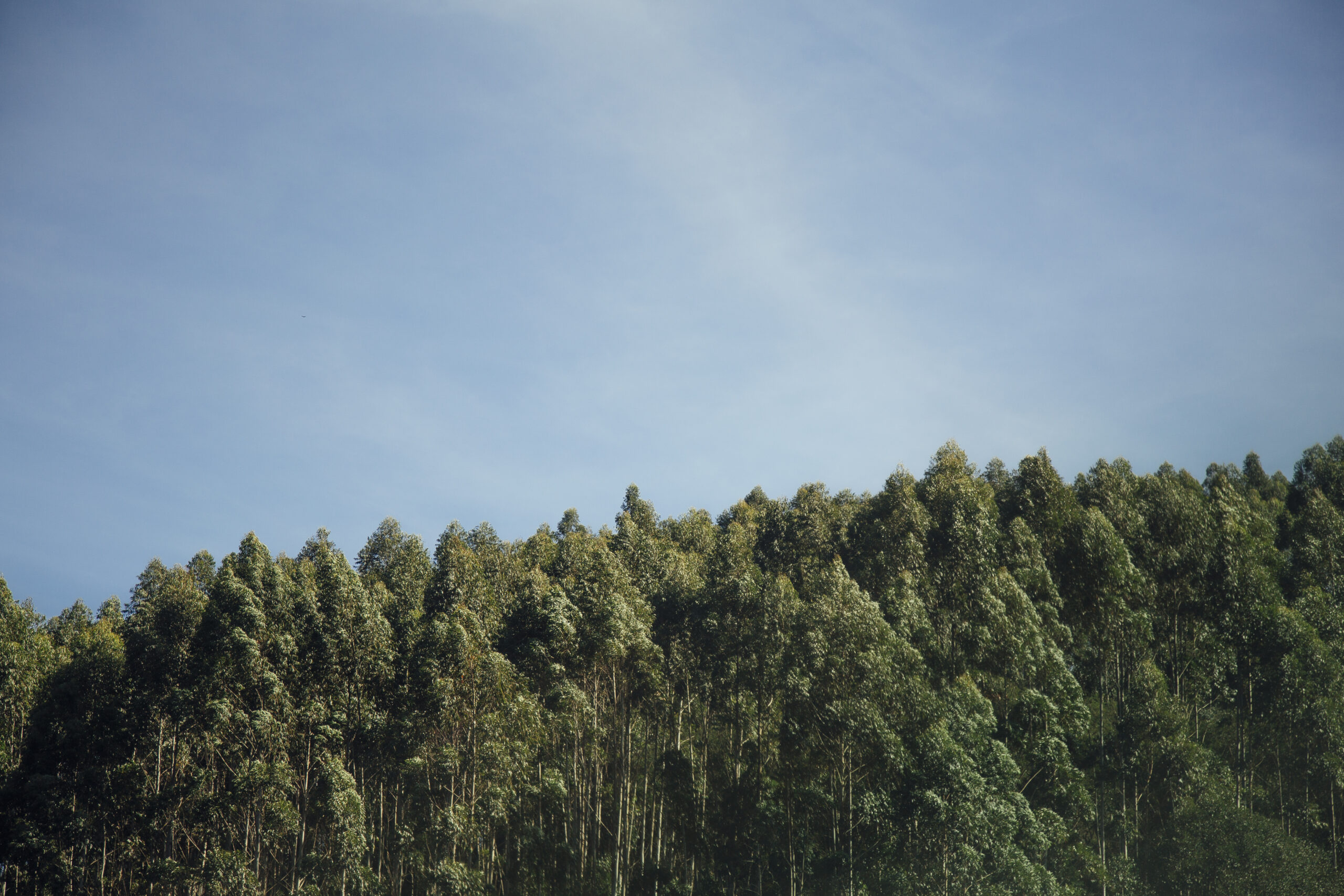
This transformation begins in the forest. Silviculture, the planned cultivation of forests for commercial purposes, is today one of the most effective practices for preserving original biomes and reducing pressure on native wood extraction. In Brazil, pine forests, cultivated mainly in the South and Southeast, support a highly productive forestry sector with full traceability across the supply chain. Every harvested tree is replaced by new seedlings, creating a continuous cycle of reforestation and carbon capture.
Beyond carbon storage, mass timber construction delivers both environmental and operational advantages:
-
Reduces a project’s carbon footprint, especially when integrated into hybrid systems;
-
Avoids the extraction of non-renewable resources;
-
Generates less waste and minimizes on-site environmental impact;
-
Accelerates construction timelines, with prefabricated components that arrive ready for assembly, reducing project duration by up to 40%.
Mass timber also represents a broader vision for a regenerative and low-carbon economy, one that values development in harmony with nature. By combining technology, innovation, and responsible forest management, this model strengthens the bioeconomy and promotes a production cycle that generates environmental, social, and economic benefits. It invites us to rethink how we design, build, and inhabit — transforming the forest into a driving force for a new era in construction.
Cities built with mass timber are not a distant dream. They are a real and urgent solution — one that allows the construction industry to become a true ally of the climate, the forests, and life itself.
Using the strength of the forest means building with responsibility. It means turning carbon into structure, and challenges into solutions.
This is the path Urbem chooses to follow — because the future is built with wood.
